
Recognition of prior learning
Your existing knowledge and experience may count towards the qualification — sometimes all of it.
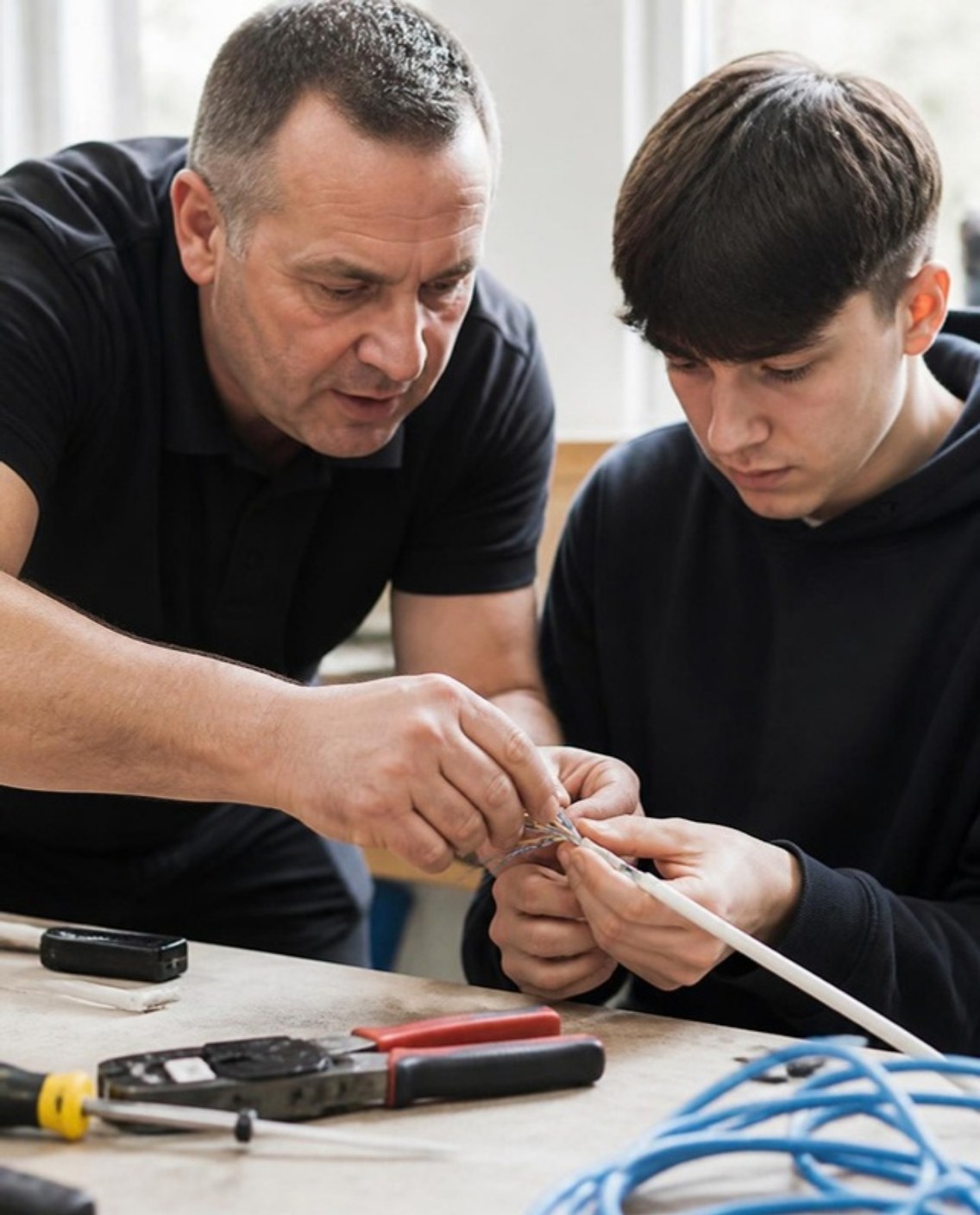
You may already have done the work
Skills recognition means your existing skills and knowledge, from formal study or job experience, may count towards a nationally recognised qualification or statement of attainment. You may have also heard it called Recognition of Prior Learning, or RPL.
To have skills recognised, you’ll need a formal assessment. An Aspire assessor will review the evidence you provide and determine whether it demonstrates the skills and knowledge required to meet the relevant unit competency standards. If your skills are recognised you may cut the time your study takes — and in some cases you may get the qualification without studying at all.
It’s not always the faster route
Sometimes it’s quicker and easier to do the course than to collect and prepare the evidence. Completing the course also puts you in front of procedures that may have changed since you learned them. Either way, we’ll give you our honest opinion on whether RPL is the best option for you.
What the assessor will consider
Three steps
1. Choose the qualification
Decide what you want recognition for. Every qualification we offer is listed under Courses, with its associated units.
2. Enrol and apply
Enrol in that qualification and complete the RPL application form, specifying the units you are claiming. Then put your evidence together.
3. We review your evidence
An assessor will review your evidence and explain which competencies you’ve demonstrated and what further assessment or training is needed.
If you have done formal study before, that is a different and usually simpler path: where both your previous study and your new course are nationally recognised training in Australia, credit transfer is normally straightforward. Tell us and we will check.
The four rules
Whatever form it takes, your evidence has to satisfy four things. An assessor will help you work out what you need, but assembling it is your job and it takes time.
Current
Your evidence must reflect current industry practices and legislation. Ideally, it should be from the past two years, although up to five may be considered.
Authentic
It has to be your own work, and we have to be able to verify that it is.
Valid
Evidence must directly relate to the relevant units of competency, rather than simply demonstrating general industry experience.
Sufficient
Enough evidence must be provided to meet all requirements of the relevant units of competency.
What counts as evidence
- Samples, photographs or videos of your work
- Practical assessment on the job
- Answers to questions in an interview with your assessor
- Simulation of a work activity
- Letters of validation from employers
- Performance management reports
- Copies of documents you complete at work
- Other certificates

Show it, not just assert it
The difference between an application that works and one that doesn’t is almost always whether it demonstrates the skills or merely claims them. Back up your claims with evidence wherever possible — supervisor reports, videos, photographs, job sheets, awards or newsletter items.
Say why you believe you are competent
“I have been hauling cables for two years. I believe I am competent because I finish my tasks on time, I have a strong record on working safely and I follow plans precisely. Evidence of this is in my supervisor’s report, Item 1 in my portfolio.”
Do not assume time served is the same as competence
“I have been hauling cables for two years, my tasks include rodding conduits, preparing cables, using tools and equipment and carrying out hauling activities.”
Use examples
“Before I begin a training session I make sure all computer cables are taped to the floor. When training begins I let people know where the fire exits are and advise them to drink water during the session.”
Do not claim it without showing it
“I am very aware of Workplace Health and Safety issues and I try to keep the workplace safe at all times.”
The usual worries
I do not know where to start
Working out what skills you have, which qualification to aim at and what evidence will support it is daunting from a standing start. Put the time into a detailed resume first — you will need one anyway, and in most cases we can tell you which direction to take just from reading it.
I cannot find the evidence I need
Written documentation is not the only kind. A practical demonstration, taxation records, newsletters, photographs or video all work. How you demonstrate the skill matters far less than the skill itself.
If you are working now we may add an assessment interview, or ask you to complete a challenge test. We can also assess you in your own workplace, which is easier because your evidence is all around you — note that a workplace assessment carries additional charges and needs your employer’s approval for our assessor to come on site.
Is my evidence too old?
The best evidence is timely evidence: it should reflect skills you have used recently. If the legislation or common practice in your area has changed significantly, you may need to update your skills before being assessed.
I am worried I am collecting the wrong kind of evidence
The usual trap is collecting too much of the wrong thing. Pick the qualification first, identify the core and elective units you want, then address your evidence to those units specifically. Once you have chosen, we give you evidence collection sheets for them, which makes it a much smaller job.
Can I use evidence from an old job?
Yes. Evidence you created yourself is the most valuable kind — our assessors can use references as a guide, but primary evidence beats them. You may have work documents at home you can submit, or you may be able to demonstrate the skill in your current workplace or in a demonstration workshop.
I cannot find the subject details of a course I did years ago
First ask whether it is worth tracking down at all. Often it is not. If you studied ten years ago the coursework may no longer be relevant — work health and safety and ICT have both moved a long way in six or seven years. Core skills such as basic electrical skills can sometimes still be recognised from an older course.
Recent work experience, and what you have done with what you learned, demonstrates current competence far better.
It feels like I am being asked to prove I can do my own job
Some people do feel that, and it is worth saying plainly: skills recognition is not a judgement of your ability and it is not designed to belittle your experience. It is a measuring stick applied the same way to everyone working in the same skill area. The more experience you have, the more likely it is that your skills match the qualification.
Not sure if it is worth it?
Send us your resume and we will tell you which direction to take — including whether sitting the course would be quicker than making the claim.